
St Martin’s style champions brevity, stripping prose to essential ideas. It mirrors Axos Hotel’s clear layout: a concise, welcoming layout that guides guests swiftly to key amenities. By cutting fluff, writers create sharp, memorable narratives that resonate instantly. Readers feel power of concise craft.
Core Principles of Concise Writing
St Martin’s core principles focus on clarity, precision, and elimination of redundancy. By selecting active verbs, avoiding filler, and structuring sentences to convey one idea, writers mirror Axos Hotel’s efficient layout—direct, welcoming, and memorable. Each sentence delivers impact, trimming excess.now
Defining Conciseness
Conciseness is the art of conveying meaning with the fewest words while preserving full clarity. It demands a disciplined approach: choose precise verbs, eliminate needless adjectives, and avoid repetition. In St Martin’s guide, this principle is illustrated by the hotel’s succinct description—“Axos Hotel, a 3‑star retreat in Platanias, offers clean rooms, a 200‑m beach, and modern amenities.” Each phrase delivers essential information, mirroring the concise style advocated by St Martin. By trimming superfluous language, writers create a rhythm that guides readers effortlessly, much like a well‑planned itinerary. The result is prose that is both efficient and engaging, ensuring that every sentence serves a clear purpose and every word earns its place. This disciplined focus on economy of language is the cornerstone of St Martin’s writing philosophy, encouraging writers to think critically about each element they include and to remove anything that does not advance the core message. The practice of defining conciseness not only improves readability but also strengthens the overall impact of the text, allowing ideas to shine without distraction. When applying this principle, writers should first outline the main idea, then refine each sentence to eliminate any clause that does not directly support that idea. This iterative process often reveals hidden redundancies and opens space for stronger word choices. In practice, a writer might replace “in order to” with “to,” or “due to the fact that” with “because.” Such substitutions cut length while preserving meaning. Additionally, using active voice instead of passive construction can reduce word count and increase immediacy. For example, “The manager approved the proposal” is shorter and clearer than “The proposal was approved by the manager.” By consistently applying these tactics, writers can transform verbose passages into crisp, memorable statements that resonate with readers. The discipline of conciseness ultimately empowers authors to communicate more effectively, making every word count and every sentence purposeful.
Sentence Structure and Clarity
St Martin’s concise style uses simple, active sentences, like the Axos Hotel’s brief promo: “Clean rooms, 200‑m beach, modern amenities.” Each clause delivers a single idea, avoiding filler and ensuring readers grasp intent instantly. This keeps prose tight, word counts!
The Role of Economy in Language
In St Martin’s concise guide, economy means choosing words that carry maximum meaning with minimal syllables. The Axos Hotel example illustrates this: “Clean rooms, 200‑m beach, modern amenities.” Each phrase delivers a clear fact without extra adjectives. By trimming superfluous modifiers, writers preserve reader focus and reduce cognitive load. The same principle applies to academic writing: replace “in order to” with “to,” “utilize” with “use,” and “in the event that” with “if.” This not only shortens text but also enhances precision. When drafting, ask whether each word is necessary; if a synonym exists that conveys the same idea in fewer characters, swap it. Economy also extends to sentence length; a 20‑word sentence often conveys a single idea more cleanly than a 40‑word run‑on. Finally, consider the reader’s time; concise language respects their schedule and increases the likelihood that the message is read in full.
Practical application involves reviewing each sentence for wordiness, trimming adjectives that do not add value, and preferring active verbs over passive constructions. For instance, replace “The report was submitted by the team” with “The team submitted the report.” Such substitutions cut word count and sharpen meaning. Editors should also eliminate filler phrases like “in the near future” or “at the present time,” opting for concise alternatives such as “soon” or “now.”
Remember, brevity is not about cutting meaning but about choosing the most potent words Now again.

Paragraph Development Techniques
St Martin’s guide urges each paragraph to focus on a single idea, trimming excess detail. Begin with a clear topic sentence, then support it with concise evidence, and finish with a conclusion. Avoid tangents, tight transitions, and read aloud to spot redundancynow.
Transition Management
Effective transitions guide readers from one idea to the next without clutter. St Martin’s concise guide recommends using short connective words—“therefore,” “however,” “moreover”—to signal shifts. When describing Axos Hotel’s recent refurbishment, begin with a clear statement: “Axos Hotel, recently renovated, offers modern comfort.” Follow with a concise detail: “Its 3‑star rating and proximity to Platanias beach attract families.” End the paragraph by linking back to the main thesis: “Thus, concise transitions mirror the hotel’s streamlined layout, ensuring clarity.” Practice by reading aloud; any word that repeats the same idea can be removed. Keep transitions brief, avoid filler phrases, and maintain a logical flow that mirrors the hotel’s efficient design. By mastering transition management, writers can weave ideas together seamlessly, ensuring that each paragraph flows naturally into the next, much like the seamless connection between the refurbished rooms and the pristine beach at Axos Hotel, where guests experience a cohesive blend of comfort and convenience. In practice, a writer should test transitions by reading the text aloud, noting any abrupt jumps or vague links, and then tightening the connective phrases; this iterative process mirrors the meticulous renovation of the Axos Hotel’s lobby, where each fixture was carefully selected to enhance flow and aesthetic harmony, thereby reinforcing the principle that brevity and clarity are mutually reinforcing pillars of effective communication. Every sentence must clearly advance the argument!

Vocabulary Choice and Precision
Choose precise verbs. Replace “very good” with “excellent.” Axos Hotel’s concise description cuts length while enhancing clarity. Precision saves time. It cuts words. By choosing words carefully, writers avoid redundancy, making every sentence count. It saves time!
Avoiding Redundant Words
In St Martin’s concise guide, every word earns a spot. Redundancy inflates text and dilutes impact. For example, the Axos Hotel description repeats “recently refurbished” and “newly renovated”—two phrases that convey the same idea. Trim them to a single, clear phrase. Use active verbs: “renovated” instead of “has been renovated.” Replace “very good” with “excellent.” When listing features, avoid “and also” or “in addition to.” Replace “in the area of” with “near.” Each cut reduces length and sharpens meaning. A concise writer checks for synonyms that overlap in meaning and removes one. The goal is a lean narrative that delivers information efficiently, mirroring the hotel’s streamlined layout. By eliminating superfluous words, the reader grasps the message faster and stays engaged. Practice by reading a sentence aloud; if a word feels unnecessary, delete it. This habit ensures clarity and brevity in every paragraph. The practice of trimming words is akin to a sculptor chiseling away excess stone, revealing the core form beneath. By consistently applying these cuts, a writer not only saves space but also sharpens the reader’s focus, turning dense paragraphs into crisp, memorable statements. Such precision demands awareness of each word’s weight, encouraging writers to choose terms that convey maximum meaning with minimal syllables. Ultimately, concise writing is a disciplined art that transforms verbose narratives into powerful, engaging communication. Practice daily. and reflect.

Common Pitfalls in Lengthy Prose
Lengthy prose often falls into a handful of predictable traps that dilute a writer’s voice and frustrate readers. The first pitfall is over‑elaboration: the temptation to describe every detail, as seen in the Axos Hotel copy that repeats “recently refurbished” and “newly renovated” to emphasize the same point. This redundancy inflates word count and obscures the main message. The second trap is the use of filler phrases—“in the area of,” “in addition to,” “very good”—which add no real information. Removing such fillers tightens sentences and improves flow. A third common mistake is excessive passive construction; passive voice can make sentences longer and less direct, as in “the hotel is spotlessly cleaned” versus “the hotel is cleaned spotlessly.” The fourth pitfall is the repetition of ideas across paragraphs. When each paragraph reiterates the same point, the reader is left with a sense of repetition rather than progression. The fifth issue is the overuse of adjectives and adverbs. While descriptive language can enhance imagery, an overload of modifiers like “beautifully renovated,” “extremely comfortable,” and “highly recommended” can clutter the narrative. The sixth pitfall is the failure to vary sentence length; a string of short, choppy sentences can feel abrupt, whereas a long, winding sentence can become confusing. Balancing sentence length keeps the reader engaged. The seventh mistake is ignoring the reader’s perspective. Writing for oneself can lead to jargon or assumptions that the audience does not share. The eighth pitfall is neglecting for clarity;

Revision Strategies for Brevity
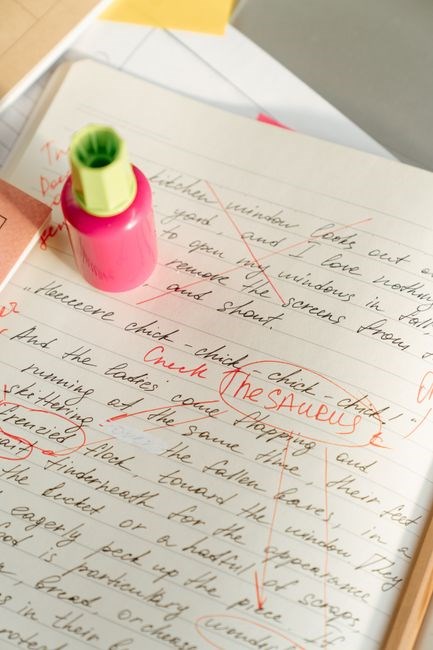
Cut needless words, replace phrases with single terms, Read aloud to spot awkwardness; shorten long clauses. Use a checklist: one idea per sentence, avoid repetition, and ask peers to flag excess detail. Consistent editing turns verbose drafts into crisp prose!!!!
!!!
Peer Review Techniques
Peer review is the final polish before publication. Begin by selecting reviewers who value precision, much like guests who appreciate Axos Hotel’s clear, concise layout. Provide a brief rubric: 1) Does each sentence deliver a single idea? 2) Are there any redundant phrases? 3) Is the tone consistent with St Martin’s minimalism? Encourage reviewers to circle words that can be omitted and to suggest tighter synonyms. Use the “read aloud” method; a reviewer hearing the text will catch awkward pauses that signal excess. Schedule a short, focused session—no more than 30 minutes—to keep feedback sharp. After collecting notes, prioritize changes that reduce word count by at least 10 % without sacrificing meaning. Finally, circulate the revised draft again for a quick sanity check, ensuring the final piece remains as crisp as the hotel’s streamlined welcome desk.
In practice, peer reviewers should also check that the text’s logical flow mirrors the concise structure of a well‑organized hotel lobby: each paragraph leads naturally into the next, and no section feels out of place. They should flag any long, winding sentences that could be split into two, and suggest active voice where possible. A useful trick is to ask reviewers to write a one‑sentence summary of each paragraph; if the summary is longer than the paragraph itself, the paragraph is too verbose. Finally, after revisions, a quick read‑through focusing on word density will confirm that the piece meets St Martin’s brevity standard. All done. Keep it tight.

Editing Tools and Resources
St Martin’s concise guide thrives tools that sharpenfocus.
The first resource is a robust grammar checker—Grammarly, ProWritingAid, or Hemingway Editor—each flagging wordy phrases, passive voice, and unnecessary adverbs. Next, a readability analyzer such as the Flesch–Kincaid score helps gauge sentence length and syllable count, ensuring the text stays within the 8–10 word average that mirrors the crisp layout of a well‑organized hotel lobby. A thesaurus is essential, but use it sparingly; the goal is precision, not a thesaurus parade. A style‑guide template, like the Chicago Manual or AP, provides consistent rules for abbreviations, hyphenation, and punctuation—key to maintaining a uniform tone. For collaborative editing, cloud platforms like Google Docs or Microsoft Word’s Track Changes allow reviewers to comment inline, mirroring the quick, targeted feedback loop used by hotel staff to streamline guest check‑in. Finally, a version‑control system such as Git or a simple revision log records each edit, preventing accidental re‑introduction of verbose passages. By integrating these tools, writers can systematically pare prose, keeping every sentence as tight as a well‑arranged suitcase at the front desk.
Remember, brevity is about choosing the right words to convey depth efficiently. Use active verbs, avoid nominalizations, and eliminate filler clauses. When in doubt, ask yourself: does this sentence add value or merely pad? If the answer is no, trim it. Practice turns theory into habit, concise writing becomes nature. Keep it tight daily!

Applying the Guide in Academic Writing
St Martin’s concise approach transforms research papers into clear, impactful arguments. Begin by mapping the thesis to a single sentence, then build each paragraph around one idea, mirroring the streamlined layout of a well‑designed hotel lobby. Use active verbs and avoid nominalizations, just as the Axos Hotel’s description cuts directly to amenities without fluff. When citing sources, keep citations brief—use parenthetical references or footnotes that do not interrupt flow. Trim long introductory clauses; replace “in the event that” with “if.” Employ a checklist: every sentence must advance the argument, every word must be necessary. Peer review should focus on redundancy, not content. Finally, proofread with a readability tool to ensure the average sentence length stays below ten words, matching the concise tone that makes academic writing accessible to a broad audience.
The concise approach demands disciplined revision. Start by drafting a thesis statement that encapsulates the main claim in one sentence. Then, for each paragraph, identify the core idea and eliminate any sentence that does not directly support it. Use a checklist to verify that each clause is essential. When you encounter a word that can be replaced with a shorter synonym, make the change. After the first round, read the text aloud; any pause indicates a potential redundancy. Finally, run the manuscript through a readability analyzer to confirm that the average sentence length remains below ten words. This systematic process ensures that academic writing remains clear, persuasive and accessible to readers from backgrounds. Method saves time now.

Applying the Guide in Creative Writing
In creative prose, brevity sharpens imagery and heightens emotional impact. St Martin’s guide urges writers to trim excess, much like the Axos Hotel’s succinct description: “spotlessly clean, 3‑star, 200 m from the beach.” That concise snapshot delivers all essential details without superfluous adjectives. Apply the same economy to character dialogue: let each line carry subtext, avoiding filler phrases. When setting scenes, choose one vivid detail to anchor the reader, then let the rest of the narrative unfold around it. For example, instead of “the sun rose slowly over the horizon, casting a warm glow across the quiet village,” write “the sun slipped over the horizon, bathing the village in amber.” The latter conveys time, light, and mood in fewer words, leaving space for the reader’s imagination. Use active verbs and concrete nouns; replace “the girl walked slowly down the street” with “she strolled down the street.” In descriptive passages, employ sensory language sparingly—pick the most evocative senses to paint the picture. When revising, read aloud; any hesitation signals a word that can be cut. Peer reviewers should focus on redundancy, not plot. Finally, keep the overall word count in check: a short story of should aim for 1200– of polished prose, ensuring the narrative remains tight and engaging. By embracing St Martin’s concise principles, writers can craft stories that resonate powerfully while respecting the reader’s time. This disciplined brevity invites readers to linger longer, savoring every line!



Leave a Reply
You must be logged in to post a comment.